Politics
01:18 PM | 13 Jun 2026
“We are not asking for anything more than this.” Salam sends a direct message to the party
Fady Mahouly
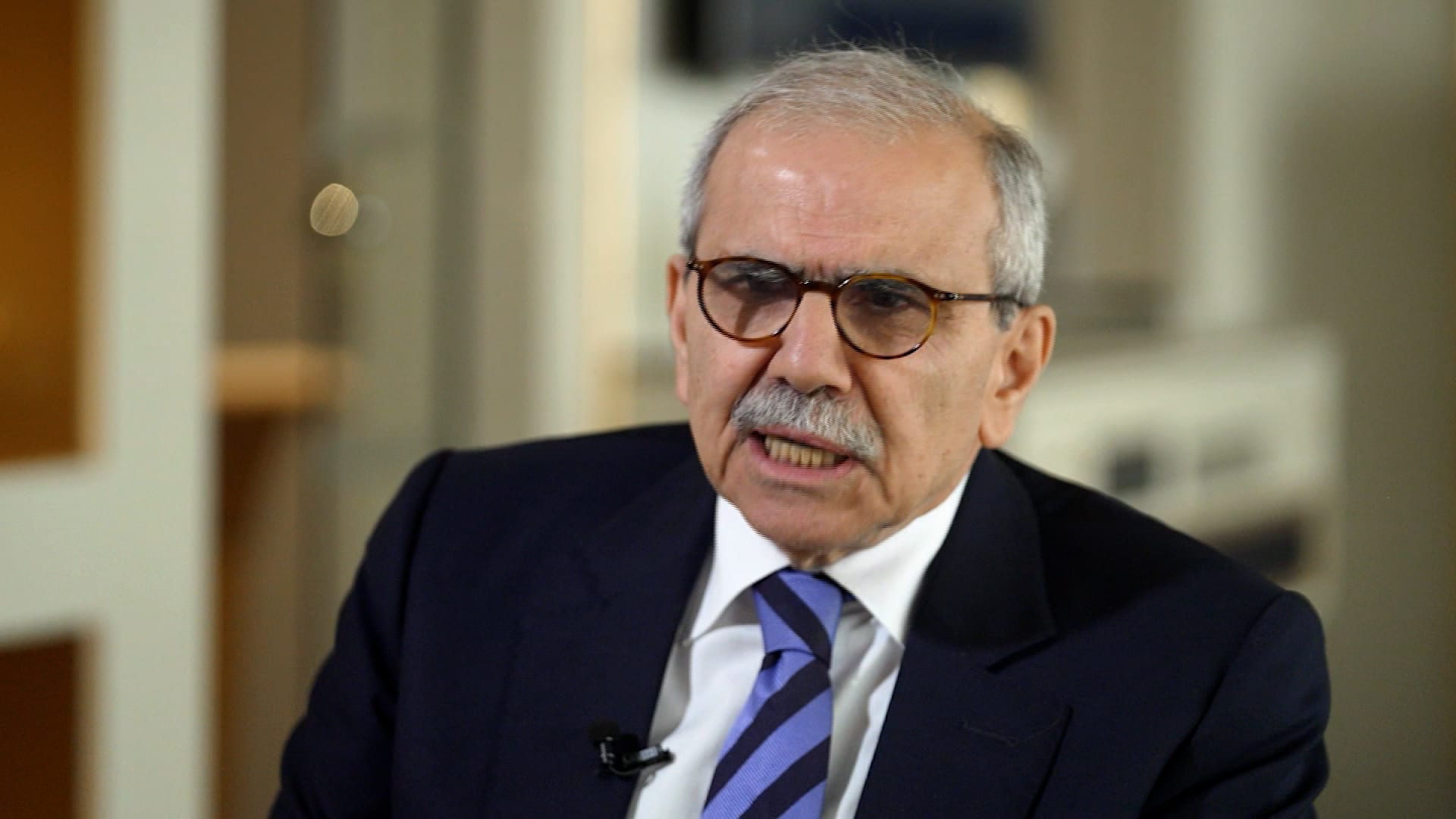
Prime Minister Nawaf Salam called on the party to give priority to Lebanon’s interest over any other considerations, and urged it to support the negotiating path led by the Lebanese state with Israel under American auspices, stressing that no one is negotiating in the name of Lebanon except the Lebanese state.
Salam said, in an interview with Reuters, that the party must be “faster than us, or at the same speed,” and declare its support for the ongoing negotiations in Washington, which are scheduled to resume on June 22 between Lebanon and Israel under American auspices.
According to a Lebanese source familiar with the talks, quoted by Reuters, Tehran expressed its annoyance with Beirut’s decision to negotiate independently with Israel, considering that this deprives it of an essential negotiating card in its confrontation with Washington.
Salam stressed that Lebanon demands a permanent ceasefire as an entry point to any settlement, which would lead to a complete Israeli withdrawal and the return of hundreds of thousands of displaced people, under the supervision of the Lebanese army, while Israel seeks to dismantle the party as a military force, especially in southern Lebanon, before withdrawing from the lands it controls.
The Prime Minister indicated that Lebanon is naturally affected by the course of the ongoing negotiations in Islamabad, but he stressed that the Lebanese state is dealing with the issue from its independent position. He said: "We are affected by war, peace, and calm in the region, and if this path leads to a ceasefire and calm, then we will certainly benefit from it."
Salam considered that Lebanon had chosen “the least expensive path,” rejecting the characterization of arms exclusivity as an Israeli demand, and recalling that the Taif Agreement and the government’s ministerial statement clearly stipulated extending the authority of the Lebanese state over its entire territory, restoring the decision to war and peace, and exclusivity of arms in the hands of the state.
He added: "Did Israel sit with us at the table and contribute to drafting our ministerial statement? Of course not."
Salam stressed that communication with the party is continuing, and that what is required of it is to implement the commitments contained in the ministerial statement, saying that the south must be a weapons-free zone, and that the party granted confidence to the government twice despite its affirmation of the principle of arms exclusivity.
On the other hand, he indicated that the party refuses to complete the current negotiation path, while the party’s Secretary-General, Sheikh Naim Qassem, previously described the negotiations as “shameful” and rejected Washington’s announcement, considering that it constitutes “a road map to exterminate a section of the Lebanese people and enslave the rest.”
Salam pointed out that about 3,700 people were martyred in Lebanon as a result of Israeli attacks since March 2, including 730 women, children, and paramedics, while more than 11,000 people were injured, and about 1.2 million people were displaced, according to figures from the Lebanese Ministry of Health.
Salam sent a direct message to the party, saying: “If you are truly concerned about your so-called environment and the tragedies of your environment, all that is required of you is to fulfill your obligations. We are not asking for anything more than this.”
He concluded by confirming that Washington did not provide any guarantees regarding the future of the negotiation, but he called for giving the American mediator a chance, adding: “It is better to give the whistle to the American mediator, and not listen to political chatter.”
He stressed that the dispute with the party revolves around weapons, saying: “Our problem with the party is the party’s weapons, and we consider it a Lebanese political force, and we want it to fulfill its Lebanese obligations.”